- Main Article: Kathu Waterfall Phuket: The Ultimate 2025 Guide to Hiking, Swimming & Safety
- Related articles:
Is Kathu Waterfall safe for families with children?
Quick Answer: Yes, Kathu Waterfall is safe for families with children if you stick to the lower-level pools, which are shallow and calm, making them perfect for wading. Safety is improved by wearing high-grip water shoes, avoiding strollers, and visiting during the dry season (November-May) when paths are less slippery.
Kathu Waterfall can be a safe and memorable family adventure with the right preparation. Here are the essential takeaways:
- Swimming Safety: Stick to the first few lower-level pools. They are shallow (ankle-to-knee deep) and ideal for toddlers and young children to splash and wade in safely. Avoid the deeper, more rugged upper pools.
- Stroller Accessibility: Do not bring a stroller. The path consists of uneven stone stairs. A baby carrier or hiking backpack is the best alternative for infants and toddlers.
- Essential Gear: High-grip water shoes are crucial for navigating slippery rocks. Pack plenty of water, snacks, kid-friendly insect repellent, and a basic first-aid kit.
- Best Time to Visit: The dry season (November to May) is the safest time for families with young children, as the paths are drier and the water flow is gentler.
- Cost and Comparison: Visiting Kathu Waterfall is completely free, and its lower levels are more accessible for toddlers than other Phuket waterfalls like Bang Pae.

The jungle breathes around you—heavy, humid air thick with the scent of earth and green growth. Cicadas thrum their electric symphony while somewhere ahead, the sound of cascading water whispers promises of cool relief. Through a canopy of tangled leaves and vines, you catch your first glimpse of Kathu Waterfall, and suddenly the mix of excitement and parental anxiety hits like a wave. Can I really take my kids here? Will it be safe?
This question haunts every parent planning their Phuket adventure. The idea of waterfalls and children brings equal measures of wonder and worry—visions of Instagram-worthy family moments clashing with fears of slippery rocks and unknown depths. But here’s the truth: with the right plan, Kathu Waterfall transforms from a source of anxiety into one of your family’s most treasured Thai memories.
This isn’t just another generic safety guide filled with obvious warnings. This is a plan built on real-world experience from families who’ve walked these paths with their own children, tested these waters with their own toddlers, and learned which pools are perfect for splashing and which stairs require extra caution. We’re here to turn your worries into confidence, your hesitation into anticipation.
For a complete overview of the waterfall, including detailed hiking trails and seasonal variations, please refer to our ultimate guide: Kathu Waterfall Phuket: The Ultimate 2025 Guide to Hiking, Swimming & Safety. This article focuses specifically on family safety, giving you the detailed roadmap you need to navigate this jungle gem with children in tow.

On this page: Discovering Phuket's most accessible jungle oasis The golden rule: When to visit Kathu waterfall (and when to reconsider) Show more The rainy season (June – October): A lush and powerful cascade The dry season (November – May): Managing expectations for a tranquil walk Our expert advice on timing your visit How to […]
A parent’s guide to the path: navigating the waterfall terrain with kids

Taming the slippery steps: footwear and techniques
The stone steps at Kathu Waterfall are beautiful—and treacherous. Carved naturally by decades of flowing water, they’re polished smooth by countless footsteps and perpetually damp from mist and humidity. But with the right approach, these steps become manageable, even with little ones.
Footwear makes all the difference. Forget flip-flops—they’re a recipe for disaster. Water shoes with high-grip soles are your best friend here, providing the traction your family needs on wet surfaces. For children, sturdy sandals with good ankle support work well too. Heavy sneakers, while tempting for the grip, become waterlogged and slippery, so resist the urge.
Timing is everything. Visit in the afternoon when the sun has had time to dry some of the most traveled stone steps. Morning visits, while cooler, often mean dealing with overnight moisture and dew that makes everything more slippery.
Based on our team’s own family visits, we’ve discovered the game-changing “three points of contact” rule. Teach your kids to always have three points of contact on the stairs—two hands and one foot, or two feet and one hand. It’s a simple technique that dramatically improves stability and confidence. Children naturally understand this concept when you explain it as “climbing like a monkey,” and it makes navigating the terrain feel like an adventure rather than a chore.
For official trail difficulty ratings and current conditions, the Kathu Waterfall trail details on AllTrails provides valuable, up-to-date information about the hiking trail itself.
The stroller question: realities and alternatives
Can you bring a stroller to Kathu Waterfall? No. The trail consists of multiple sets of uneven stone stairs, natural rock formations, and narrow paths that make stroller navigation impossible.
But don’t let this deter you if you have a toddler or infant. A comfortable, high-quality baby carrier or hiking backpack is the perfect solution. These allow you to navigate the terrain hands-free while keeping your little one secure and comfortable. Many experienced parents actually prefer this option—it keeps children safe from wandering too close to water edges and prevents the exhaustion that comes with long walks for little legs.
The trail thoughtfully provides benches and rest stops along the path, perfect for taking breaks with your baby carrier, nursing, or letting older children catch their breath. These stopping points also offer some of the best photo opportunities, allowing you to capture those precious family moments without rushing.
Decoding the drop pools: a tier-by-tier safety guide for swimming
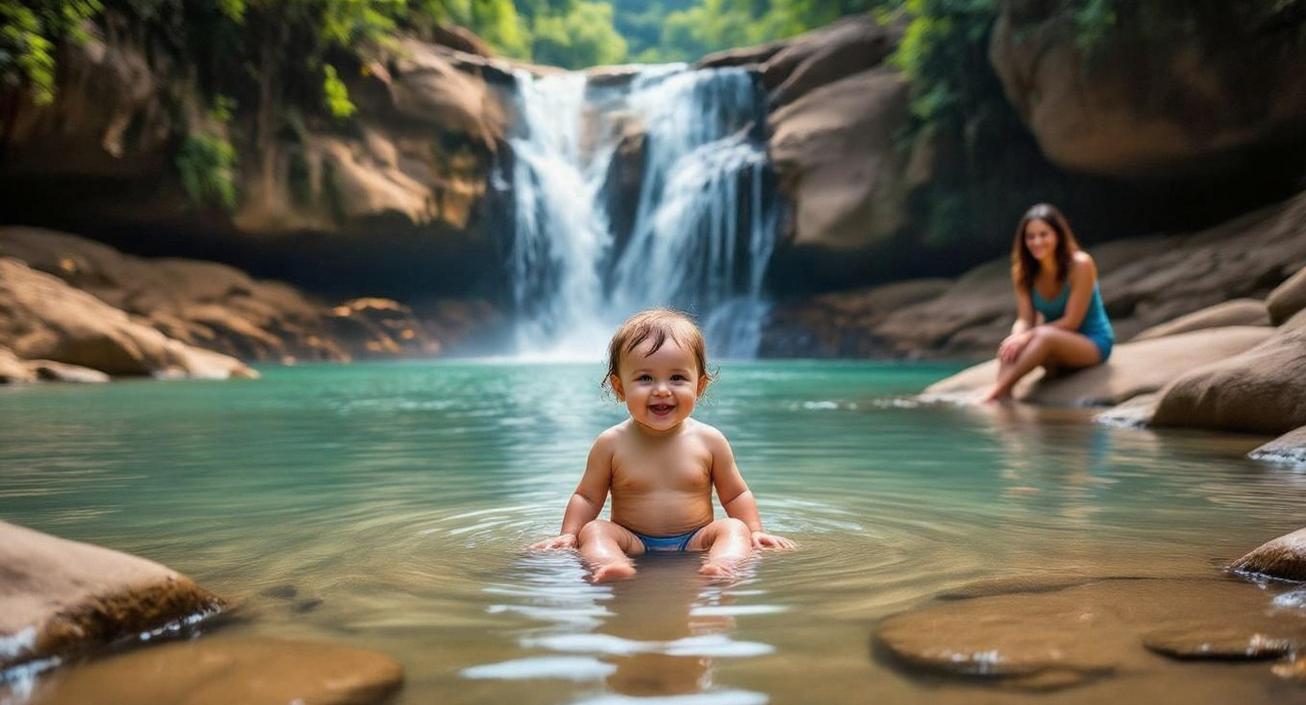
The family-friendly zone: the safest pools for toddlers and young children
Not all waterfall pools are created equal, and at Kathu, understanding the tier system can mean the difference between a magical family experience and a stressful outing.
The first large pool you encounter is your golden ticket. This wide, welcoming basin is where families should focus their time. The water here is typically only ankle-to-knee deep on a small child, perfect for splashing and sitting in the cool water without the risks that come with deeper swimming areas. The rocks surrounding this pool are naturally smoother, worn down by countless years of water flow, making them less likely to cause scrapes if children slip.
The second tier up offers similar family-friendly conditions—shallow enough for wading, wide enough for playing, and surrounded by relatively stable rocks that provide good seating for parents to supervise. These aren’t swimming pools in the traditional sense, but rather nature’s perfect splash zones where children can experience the magic of a jungle waterfall without the depths that cause parental panic.
The beauty of these lower pools lies in their design by nature itself. The water flows gently over broad, flat rocks, creating natural steps and shallow basins that seem custom-made for family enjoyment. The sound of falling water is gentle here, not the thunderous cascade you’ll find higher up, making conversation and supervision much easier.
Areas for caution: knowing which pools to avoid with children
The higher you climb, the deeper and more dangerous the pools become. The upper tiers of Kathu Waterfall are beautiful, but they’re designed for confident swimmers and adults who can handle unpredictable depths and stronger currents.
These elevated pools feature more rugged, angular rocks that can be sharp and extremely slippery when wet. The water depth becomes unpredictable—what looks like a shallow area might suddenly drop off, and there are no lifeguards on duty to help if something goes wrong.
Water safety concerns extend beyond just depth. While generally safe, caution is always advised when dealing with natural freshwater sources. The CDC health information for visitors to Thailand provides context on recreational water illnesses that can occasionally occur in freshwater environments.
The official travel safety advice for Thailand from the UK Government specifically warns about swimming near waterfalls, emphasizing the importance of constant supervision and staying in designated safer areas—exactly what we’re helping you identify in this guide.
The ultimate family safety checklist: packing and preparation

Your essential family packing list
Water & Snacks: Pack more than you think you’ll need. While there are small stalls at the entrance selling basics, there’s nothing along the trail itself. Dehydration happens quickly in Thailand’s humidity, especially with active children.
Kid-Friendly Insect Repellent: Mosquitoes are present, particularly during the rainy season. Choose a DEET-free, picaridin-based repellent that’s safe for children’s skin and effective in tropical conditions.
Basic First-Aid Kit: Include antiseptic wipes for cleaning scrapes, waterproof plasters that won’t come off in water, and children’s pain relief medication. Small cuts from rocks are minor but common.
Sunscreen & Hats: While much of the path is beautifully shaded by jungle canopy, Phuket’s sun is intense during exposed sections. Reef-safe sunscreen is environmentally responsible and just as effective.
Dry Clothes & A Towel: Essential for after water play. Children will get wet—embrace it and be prepared for the aftermath.
Wildlife watch: what to realistically expect
The reality check parents need: While Phuket is home to snakes and spiders, they’re shy creatures that rarely appear on this well-traveled trail. The main wildlife you’ll encounter consists of colorful birds, interesting insects, and the occasional curious monkey in the distance.
Mosquitoes are your primary adversary—they’re persistent and particularly active in shaded, humid areas. Good repellent is your best defense, far more important than worrying about exotic wildlife that visitors rarely encounter.
The jungle soundscape might seem overwhelming at first—the calls, chirps, and rustles that create nature’s soundtrack—but it’s actually a sign of a healthy ecosystem going about its daily business while largely ignoring human visitors.
Kathu waterfall in context: is it the right choice for your family?
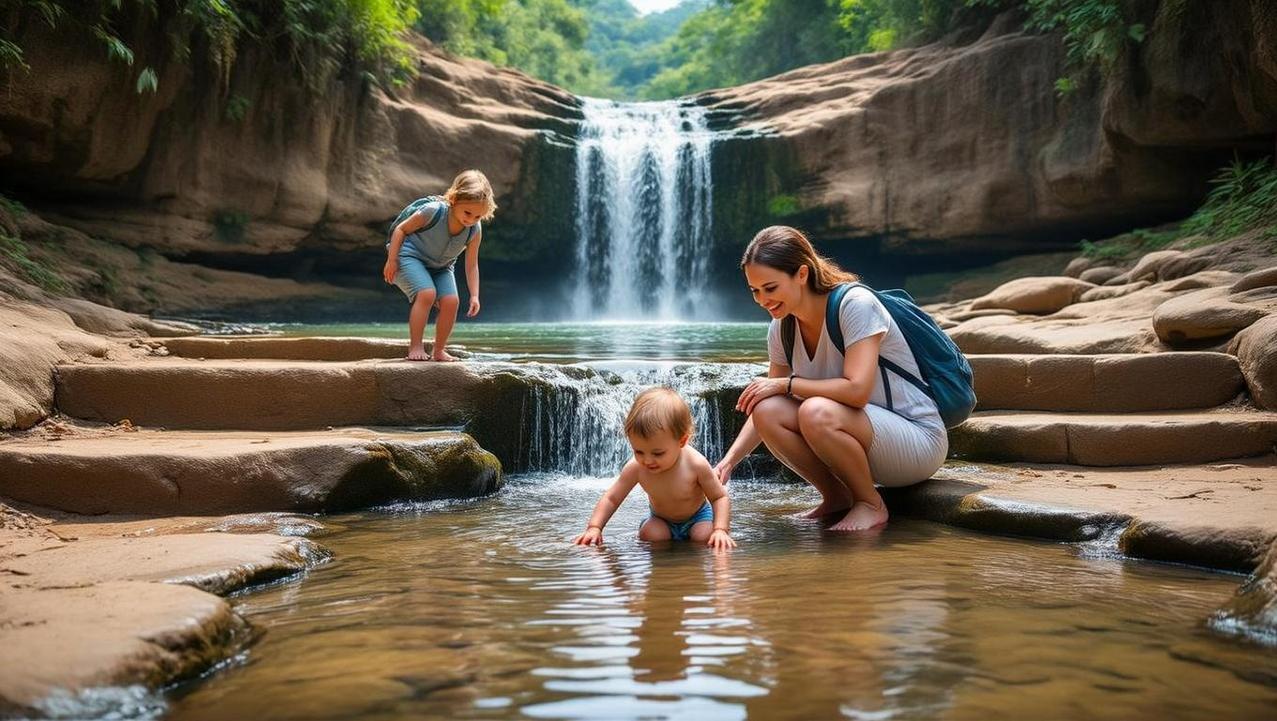
Kathu waterfall vs. Bang Pae waterfall: a family-focused comparison
Cost: Kathu is completely free; Bang Pae requires an entrance fee.
Accessibility: Kathu’s lower levels are specifically easier for toddlers and families with young children; Bang Pae demands a more committed jungle walk that’s better suited for older children.
Wow-Factor: Bang Pae delivers larger, more dramatic cascades, especially during the rainy season, but Kathu excels at providing an accessible jungle experience focused on the journey and interactive shallow pools rather than dramatic scenery.
Family Infrastructure: Kathu offers better rest stops and natural seating areas; Bang Pae is more about the destination than the journey.
For a deeper analysis of how these waterfalls compare, including seasonal considerations and detailed accessibility information, read our comprehensive Phuket Waterfall Showdown: Kathu vs. Bang Pae vs. Ton Sai.

On this page: Meet the contenders: a snapshot of each waterfall Show more Kathu waterfall: the champion of convenience Bang pae waterfall: the most impressive cascade Ton sai waterfall: the hiker's paradise The ultimate phuket waterfall comparison table Choosing your adventure: the best waterfall by activity Show more For families and easy access: kathu and […]
Managing expectations: the best time of year to visit
Rainy Season (June-October): The waterfall reaches its most impressive state—full, flowing, and powerful. However, the paths become significantly more slippery and challenging. This is the ideal time for families with older children (8+) who are steady on their feet and confident navigating wet terrain.
Dry Season (November-May): The waterfall might be reduced to a gentle trickle, but this is actually perfect for families with toddlers and very young children. The paths are much safer, the pools are calm and clear, and the reduced water flow makes supervision easier.
For official opening times and current conditions, you can check the official Kathu Waterfall information from the Tourism Authority of Thailand.
Answering your top questions about family safety at Kathu waterfall
Can you swim in Kathu waterfall?
Yes, you can swim and paddle in Kathu waterfall. For families with young children, it is safest to stick to the lower-level pools, which are shallow, calm, and perfect for wading rather than swimming.
Is Kathu waterfall free?
Yes, Kathu waterfall has no entrance fee. It is a popular and completely free natural attraction for both locals and tourists in Phuket.
Is the hike to the waterfall stroller friendly?
No, the path at Kathu waterfall is not stroller-friendly as it consists of many uneven stone steps. A baby carrier or hiking backpack is the best option for visiting with an infant or toddler.
What is the best time to visit Kathu waterfall with kids?
The best time for families with young children is during the dry season (November-June) when the paths are less slippery. If you want to see more impressive water flow, visit during the rainy season (June-October), but exercise extra caution on the steps.
Making great, safe memories at Phuket’s jungle gem
With thoughtful planning and realistic expectations, Kathu Waterfall transforms from a source of parental anxiety into exactly what it should be—a magical jungle adventure that creates lasting family memories. The key lies not in avoiding the challenges, but in understanding them and preparing accordingly.
Your children will remember the thrill of climbing through a real jungle, the joy of splashing in natural pools, and the pride of completing an adventure that felt both exciting and safe. These are the moments that define family travel—not the perfectly posed photos, but the genuine smiles that come from conquering something together.
While Phuket offers incredible jungle adventures like this, it’s worth noting that Thailand’s different islands each offer unique charms. Koh Samui, for example, is renowned for its serene, accessible beaches and family-friendly atmosphere, often featuring luxury accommodations just steps away from pristine shores—a perfect complement to Phuket’s more adventurous attractions.
Ready to plan your family adventure with complete peace of mind? After a day of jungle exploration, there’s nothing quite like returning to the comfort and safety of a family-friendly luxury villa in Phuket, where private pools, child-safe environments, and dedicated staff ensure your Thai adventure combines excitement with the ultimate in comfort and security.

Forbes & Partners Editorial Team
The Forbes & Partners Editorial Team specializes in creating expert-driven insights on luxury villas, property investment, and vacation rentals in Thailand. Each article blends the efficiency of AI-assisted writing with the precision and experience of human specialists in Thailand’s luxury real estate market, ensuring readers receive reliable, up-to-date, and high-value information to guide their next investment or stay.