- Main Article: The 2025 Annual Compliance Guide for Your Thai Property Company: Legal, Tax & Auditing (current article)
- Related articles:
What are the annual compliance requirements for a foreign-owned property company in Thailand?
Quick Answer: The annual compliance requirements for a Thai property company involve three core pillars: legal duties, such as holding an Annual General Meeting (AGM) and filing with the Department of Business Development (DBD); a mandatory financial audit by a licensed Thai auditor; and tax obligations, primarily filing the PND 50 corporate income tax return with the Revenue Department.
For foreign investors holding property in a Thai Limited Company, annual compliance is essential to protect the investment. Here are the key obligations:
- Legal Duties: You must hold an Annual General Meeting (AGM) and submit the audited financial statements and shareholder list (Sor.Bor.Chor.3) to the Department of Business Development (DBD).
- Financial Audit: An annual financial audit conducted by a licensed Thai auditor is mandatory for all companies, even those without income. This audited report is required for both legal and tax filings.
- Tax Obligations: Every company must file an annual corporate income tax return (PND 50) with the Revenue Department within 150 days of the fiscal year-end.
- Nominee Structure Risk: Using illegal “nominee” shareholders is a major violation of the Foreign Business Act, carrying severe penalties including fines, imprisonment, and potential forced sale of the property.

Owning a luxury property in Thailand—perhaps a stunning sea-view villa overlooking the pristine beaches of Koh Samui—represents the realization of an extraordinary dream. Yet this dream stands firmly upon a non-negotiable legal and financial foundation that demands meticulous attention and absolute compliance.
For foreign investors who have secured their tropical paradise through a Thai Limited Company, the complexity of managing critical deadlines and procedures across multiple government agencies presents a formidable challenge. The Department of Business Development (DBD), the Revenue Department, and the intricate web of regulatory requirements can quickly overwhelm even sophisticated investors who simply wish to protect their substantial investment.
This definitive 2025 playbook serves as your strategic framework to transition from high-stakes risk to bulletproof security for your property investment. Unlike generic checklists that leave you questioning compliance gaps, this comprehensive guide provides an authoritative roadmap that addresses every critical aspect of your annual obligations.
We will systematically examine the three core pillars of Thai corporate compliance: the mandatory legal duties including your Annual General Meeting and DBD filings, the required financial audit conducted by licensed Thai professionals, and the essential corporate tax obligations centered around the PND 50 filing. Each pillar builds upon the previous, creating a cohesive compliance strategy that protects your investment while maintaining your company’s good standing with Thai authorities.
The legal foundation: Understanding your Thai company and its obligations
A Thai Limited Company represents the standard and legally mandated structure for foreigners seeking to own land and property in Thailand. This requirement stems from Thailand’s fundamental legal framework, which restricts direct foreign ownership of land—a restriction designed to preserve national sovereignty over Thai territory.
The Civil and Commercial Code establishes the 51/49 ownership rule with absolute clarity: Thai nationals must hold a minimum of 51% of company shares, while foreign ownership cannot exceed 49%. This structure forms the bedrock of legitimate property ownership for international investors.
However, the most critical distinction lies between a legally compliant company structure and an illegal “nominee” arrangement. This distinction represents the single most significant risk to foreign investors, as nominee structures—where Thai shareholders exist only on paper without genuine investment or control—violate the Foreign Business Act and carry devastating penalties including asset forfeiture, substantial fines, and potential criminal charges.
Understanding this legal foundation ensures your investment strategy aligns with Thai law while protecting your substantial financial commitment to Thailand’s luxury property market.
Pillar 1: The annual legal checklist – Master your AGM and DBD filings

The Annual General Meeting stands as a mandatory legal requirement for every Thai company, regardless of business activity level. Thailand’s Civil and Commercial Code mandates this annual corporate governance obligation, making it non-negotiable for property holding companies.
The AGM process follows a precise chronological sequence that begins with publishing the meeting notice according to specified timelines—typically 7 days for small companies or 14 days for public companies. The agenda must include critical items such as the approval of the annual audit, election of directors, and any significant corporate decisions.
Following the AGM, your company faces crucial filing requirements with the Department of Business Development (DBD). These submissions include the audited financial statements and the updated list of shareholders using the Sor.Bor.Chor.3 form. The Department of Business Development website provides official documentation and requirements for these mandatory filings.
The procedural complexity of conducting a proper AGM while meeting all DBD requirements demands careful attention to detail and precise timing. For a comprehensive breakdown of these procedural details, including step-by-step meeting protocols and documentation requirements, our specialized guide provides extensive coverage of the entire AGM process.

On this page: The annual general meeting: more than just a formality The pre-AGM countdown: a chronological checklist Show more Step 1: Setting the date (the 4-month rule) Step 2: Preparing the agenda and required documents Step 3: Issuing the legal notice (the 7-day rule & 2023 update) Running a compliant meeting: from quorum to […]
Pillar 2: The annual financial mandate – Navigating the statutory audit

Is an annual audit always mandatory in Thailand? The answer is unequivocally yes—all companies must have their financial statements audited annually by a licensed Thai auditor, regardless of business activity or income generation.
The audit process begins with appointing a licensed external auditor who meets Thai professional standards. Consider factors such as the auditor’s experience with property holding companies, their understanding of foreign-owned structures, and their track record with both the Revenue Department and DBD requirements.
The audit process requires providing comprehensive financial documentation including bank statements, invoices, receipts, and all corporate financial records. The auditor conducts a thorough review of your company’s financial position, ensuring compliance with Thai Financial Reporting Standards (TFRS). This review culminates in the issuance of a signed audit report, which serves as the foundation for both your AGM proceedings and your annual tax filing for a Thai property company.

On this page: Introduction: the two inseparable pillars of annual financial compliance The annual audit: an unavoidable cornerstone of compliance Show more Why every Thai company must undergo an annual audit (even dormant ones) Selecting your champion: choosing a certified public auditor (CPA) in Thailand Understanding Thai financial reporting standards (TFRS) The definitive annual compliance […]
Thai Financial Reporting Standards represent the technical framework that governs how your company’s financial statements must be prepared and presented. These standards ensure consistency and transparency in corporate financial reporting across Thailand’s business landscape.
Pillar 3: Thailand corporate tax essentials – Filing your PND 50 correctly
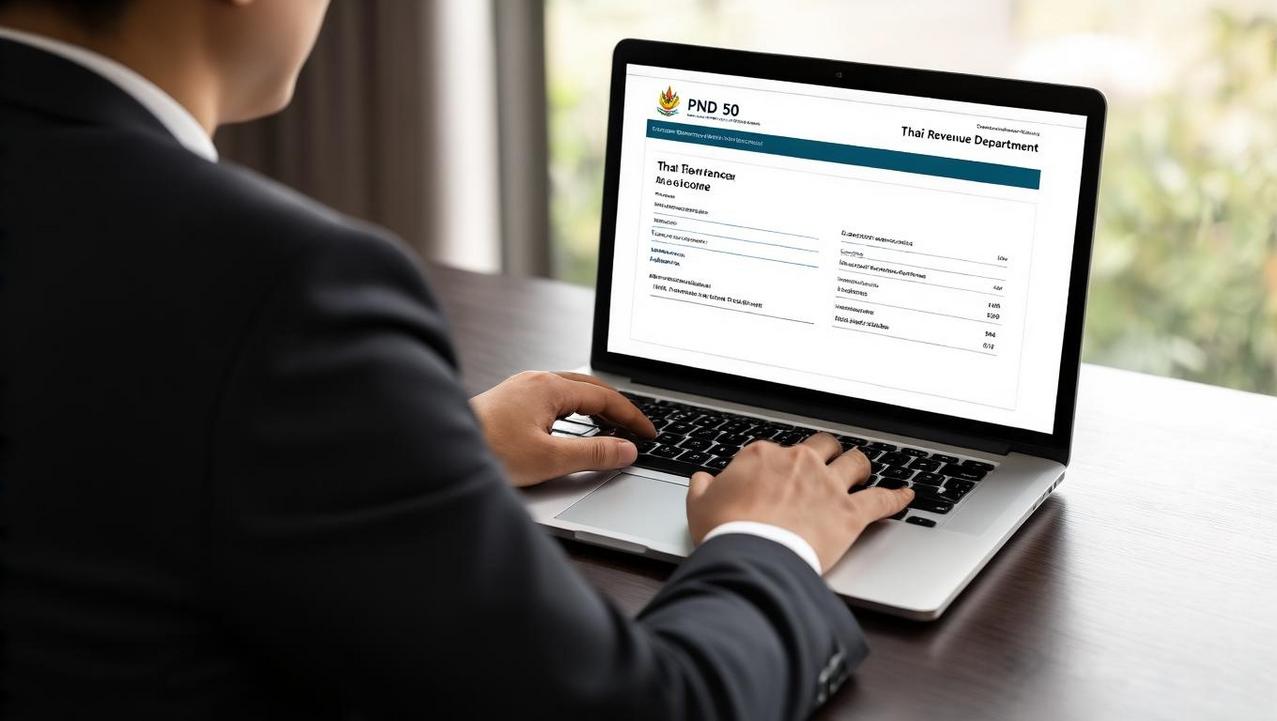
Corporate Income Tax applies to all Thai companies, including property holding companies that maintain assets without generating active rental income. Understanding this tax obligation ensures your company maintains full compliance with Thailand’s revenue requirements.
The PND 50 serves as the annual corporate income tax return form that every Thai company must file within 150 days from the end of the accounting period. According to Thailand’s corporate income tax regulations, this filing represents a fundamental obligation that cannot be overlooked or delayed.
Beyond the primary corporate tax, property owners must consider additional tax obligations such as Specific Business Tax (SBT) if property sales occur, and the annual Land and Building Tax that applies to all property ownership in Thailand. These obligations create a comprehensive tax framework that requires ongoing attention throughout the year.
Maintaining clean, accurate bookkeeping throughout the year ensures a smooth audit process and correct tax filing. This proactive approach prevents last-minute scrambles to locate documentation and reduces the risk of filing errors that could trigger unwanted scrutiny from tax authorities.
The high-stakes risk: The nominee trap and how to ensure your structure is compliant

An illegal nominee structure, in the eyes of Thai law, constitutes a company created solely to circumvent the Foreign Business Act rather than to conduct legitimate business activities. The Foreign Business Act (FBA) specifically targets arrangements where Thai shareholders exist only on paper without genuine financial investment or corporate control.
Thai authorities investigate and identify sham companies through multiple verification methods, including examining the financial status and independence of Thai shareholders, reviewing the source of share capital, and assessing whether Thai shareholders exercise genuine control over corporate decisions. These investigations can occur at any time and often result from routine compliance checks or complaints from competitors.
The penalties for violating the FBA include substantial fines reaching millions of baht, imprisonment for up to three years for both foreign and Thai participants, and court orders requiring forced divestment of property assets. These consequences can destroy decades of careful investment and planning.
Legitimate corporate control mechanisms exist within Thai law, such as preference shares that grant enhanced voting rights to foreign directors while maintaining compliance with ownership restrictions. These legal structures provide foreign investors with practical control while respecting Thailand’s sovereignty requirements.
The distinction between legal preference share arrangements and illegal nominee structures requires careful legal guidance and proper documentation. Understanding these nuances protects your investment while ensuring long-term compliance with evolving regulatory enforcement.
Your 2025 compliance timeline and strategic summary
The annual compliance timeline for companies with a December 31st fiscal year-end follows this critical sequence:
Core Compliance Timeline:
- By April 30th: Hold the Annual General Meeting (AGM)
- By May 14th: Submit the list of shareholders (Sor.Bor.Chor.3) to the DBD
- By May 31st: Submit the audited financial statements to the DBD
- By May 31st: File the annual corporate tax return (PND 50) with the Revenue Department
This timeline represents the foundation of compliant ownership, transforming what many perceive as bureaucratic burden into a strategic asset protection framework. Each deadline builds upon the previous requirement, creating an integrated system that demonstrates your company’s legitimate business purpose and regulatory compliance.
Professional guidance throughout this process represents not a luxury, but a necessity for navigating the nuances of the Thai regulatory environment. Whether your investment involves a private villa on Koh Samui’s pristine coastline or commercial property in Bangkok, these compliance requirements protect your substantial financial commitment while ensuring long-term security.
The World Bank’s Doing Business report for Thailand confirms that Thailand maintains a sophisticated regulatory framework designed to protect both foreign investors and national interests when proper procedures are followed.
Frequently asked questions about Thai property company compliance
Is a nominee shareholder legal in Thailand?
No, using a nominee shareholder solely to circumvent foreign ownership restrictions is illegal under Thailand’s Foreign Business Act and carries severe penalties, including fines, imprisonment, and potential forced sale of the property.
What is PND 50 in Thailand?
PND 50 is the official annual corporate income tax return form that every company registered in Thailand must file with the Revenue Department within 150 days of its fiscal year-end.
Is an annual audit mandatory in Thailand?
Yes, an annual financial audit conducted by a licensed and independent Thai auditor is a mandatory legal requirement for all companies in Thailand, regardless of their business activity or income.
What are the legal requirements for a company limited in Thailand?
Key legal requirements include having at least two shareholders, with Thai nationals holding a minimum of 51% of the shares, appointing at least one director, registering with the Department of Business Development, and fulfilling all annual compliance duties like the AGM, audit, and tax filings.
How do foreigners legally own property in Thailand?
Foreigners can legally own buildings and structures, but not land. The most common legal method for effective control of land and a house is by setting up a compliant Thai Limited Company with a majority of Thai shareholding.
What are the penalties for violating the Foreign Business Act?
Penalties for violating the Foreign Business Act, such as using illegal nominee structures, can include heavy fines for the company and its directors, imprisonment for up to three years, and court orders to dissolve the company or sell its assets.
Achieving peace of mind through compliant ownership
Meticulous annual compliance represents the ultimate strategy for protecting your property investment and achieving long-term peace of mind in Thailand’s dynamic market. The sophisticated regulatory framework, while complex, provides clear pathways for foreign investors who commit to proper procedures and professional guidance.
Your luxury villa on Koh Samui—with its breathtaking sea views and world-class amenities that rival the finest properties across Southeast Asia—deserves protection through bulletproof legal and financial compliance. The island’s unique combination of international accessibility, pristine beaches, and luxury infrastructure makes it an exceptional choice for discerning investors who appreciate both lifestyle and investment value.
The complexity of Thai compliance requirements, from AGM procedures to audit requirements to tax filings, becomes manageable with clear understanding and professional support. Each component works together to create a comprehensive protection strategy that safeguards your investment while maintaining your company’s reputation with Thai authorities.
Navigating Thai compliance is complex, but you don’t have to do it alone. Contact us for introductions to our network of trusted legal and accounting professionals in Thailand who specialize in protecting foreign property investments through meticulous compliance strategies.

Forbes & Partners Editorial Team
The Forbes & Partners Editorial Team specializes in creating expert-driven insights on luxury villas, property investment, and vacation rentals in Thailand. Each article blends the efficiency of AI-assisted writing with the precision and experience of human specialists in Thailand’s luxury real estate market, ensuring readers receive reliable, up-to-date, and high-value information to guide their next investment or stay.