- Main Article: Luxury Villas Thailand: What Defines High-Standing, Luxury, and Ultra-Luxury
- Related articles:
- The Foundation of Prestige: How to Evaluate a Luxury Villa’s Location in Thailand
- Peace and Perspective: Why View & Privacy Are Non-Negotiable in a Luxury Villa
- The Language of Luxury: Decoding Architectural Design & Materials in Thai Villas (current article)
- More Than Square Feet: How to Assess the Spatial Experience of a Luxury Villa
- Perfection in the Details: Judging a Luxury Villa’s Condition and Finishes
- Beyond the Infinity Pool: Ranking The Must-Have Facilities in a Luxury Thai Villa
- The Invisible Standard: A Guide to Personalized Services in a Luxury Villa
- The Soul of a Villa: Why Staff and Service Define the Luxury Experience
- The ‘Unforgettable’ Factor: What Makes a Luxury Villa Truly Rare and Unique
- Orchestrating Emotion: The Elements of an Unforgettable Luxury Guest Experience
- Decoding Excellence: How to Rate and Classify a Luxury Villa Yourself
How do you evaluate the architectural design and material quality of a luxury villa in Thailand?
Quick Answer: To evaluate a luxury Thai villa, assess its architectural identity (like Tropical Modernism), the authenticity of its materials (such as real teak and local stone), its climate-responsive design for passive cooling, and the quality of craftsmanship visible in details and finishes.
To distinguish a truly exceptional Thai villa, assess these four key areas:
- Architectural Identity: Look for a coherent style, such as Tropical Modernism, that prioritizes clean lines, open-plan living, and harmony with the environment over a jumble of trends.
- Material Authenticity: Inspect for genuine, high-quality materials like solid teakwood and local stone. Check for signs of master craftsmanship in the seamless joints and hand-finished details.
- Climate-Responsive Design: Verify that the villa works with the tropical climate through features like wide roof overhangs for shade, cross-ventilation for cooling breezes, and an orientation that minimizes harsh sun exposure.
- Spatial Flow and Harmony: Feel how you move through the space. A superior design has an intuitive flow, seamless transitions between indoor and outdoor areas, and a sense of balance and serenity.

There’s something unmistakable about stepping into a space that was born from intention rather than mere function. The way sunlight filters through deliberately placed windows, casting shadows that shift like a meditation throughout the day. The satisfying weight of a door that closes with a whisper rather than a slam. The cool caress of natural stone beneath your feet while tropical heat shimmers just beyond the threshold. This isn’t architecture as shelter—this is architecture as storytelling.
In Thailand’s luxury villa market, where every listing promises paradise and every photograph captures a slice of heaven, how do you distinguish the villas with souls from those with merely pretty facades? The answer lies in learning to read the language that exceptional design speaks—a dialect of proportion, materials, and climatic intelligence that separates the truly extraordinary from the merely expensive.
This architectural literacy is one pillar within a complete decision framework: our expert guide to renting a luxury villa in Thailand structures the full set of criteria—location, privacy, services, guest experience—that together define what makes a property truly exceptional.

On this page: EDITORIAL INTRODUCTION How to choose the right luxury villa in Thailand: a foolproof framework Show more First, define your core travel objective Second, identify your desired lifestyle Third, clarify your non-negotiable expectations Finally, use the 6 core decision filters: where, when, what, with whom, how, why WHERE: Island and zone selection WHEN: […]
This exploration of architectural integrity forms one of the ten pillars we use to evaluate properties in our definitive guide to define High-Standing, Luxury, and Ultra-Luxury. Design isn’t just about aesthetics; it’s a fundamental measure of a property’s standing, a silent narrator of quality that speaks volumes about the vision, craftsmanship, and respect for place that went into its creation.

On this page: The sense of place: A villa's foundation in location and environment Show more Pillar 1: The macro vs. micro-location debate Pillar 2: The currency of view and privacy The physical form: Evaluating architecture, materials, and space Show more Pillar 3: The language of design and materials Pillar 4: Assessing the spatial experience […]
The blueprint of thai luxury: Understanding tropical modernism
To decode luxury in Thai villa architecture, you must first understand the dominant language being spoken: tropical modernism. This isn’t simply modernism transplanted to the tropics; it’s a thoughtful evolution that addresses the unique demands of Thailand’s climate while maintaining the clean, uncluttered aesthetic that defines contemporary luxury.
“Tropical modernism isn’t a look — it’s comfort engineered.”
What is ‘tropical modernism’ and why does it work in Thailand?
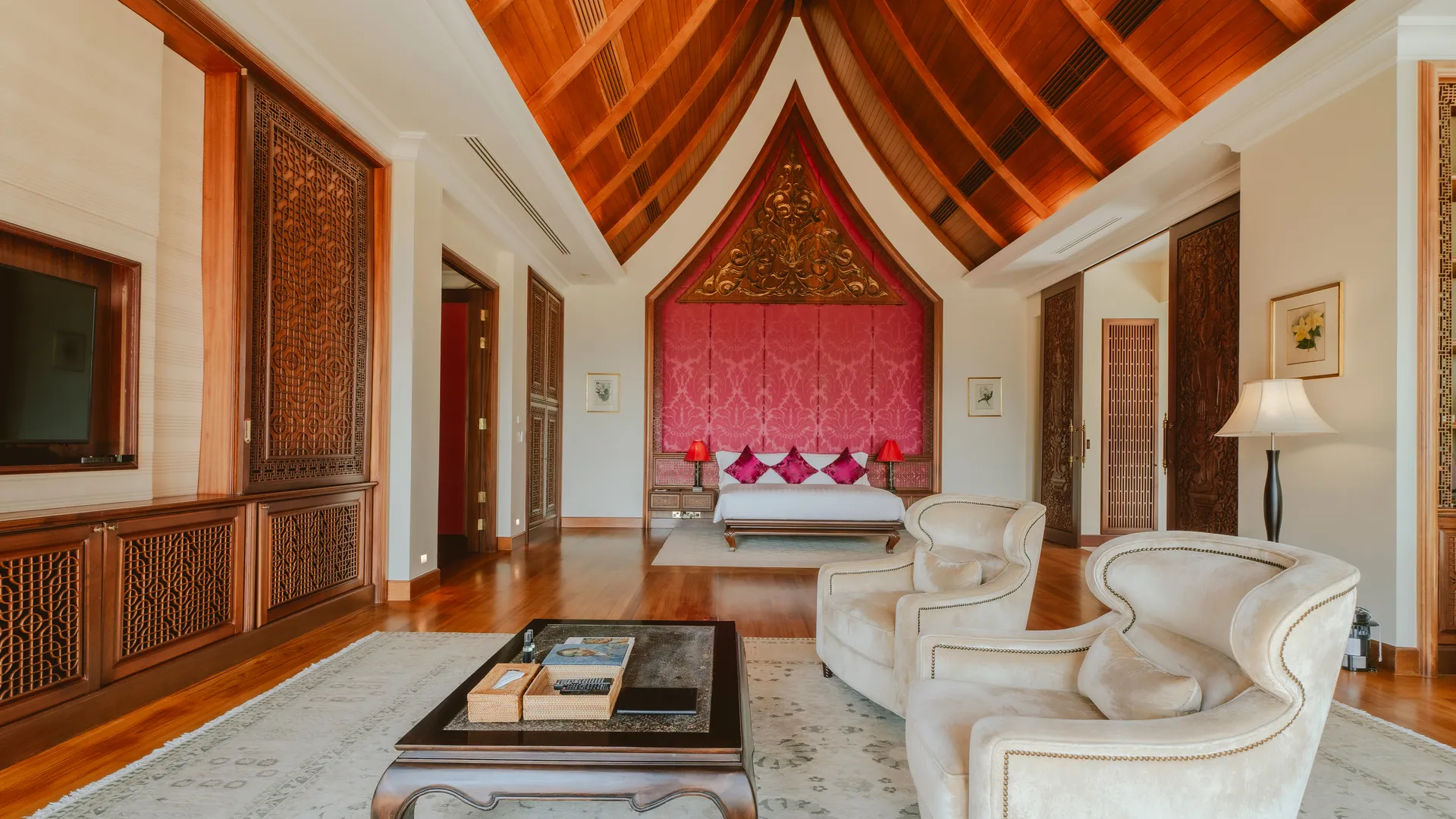
Tropical modernism is an architectural style that blends the clean lines and minimalism of modernism with design features that are essential for comfort in a hot, humid climate. At its core, it’s about creating spaces that breathe—literally and figuratively. The philosophy embraces open-plan living that allows air to flow freely, the strategic use of natural materials that age gracefully in tropical conditions, and most importantly, the dissolution of barriers between interior and exterior spaces.
Consider how this differs from generic ‘modern’ design that might look sleek in architectural magazines but proves fundamentally unsuited for Thailand’s environment. A wall of west-facing glass without adequate overhangs becomes a greenhouse by afternoon. A flat roof without proper drainage becomes a maintenance nightmare during monsoon season. Tropical modernism acknowledges these realities and transforms them into design opportunities.
“Materials don’t lie; they age into truth.”
The essential role of climate-responsive design
This is where the true intelligence of Thai luxury architecture reveals itself. The most sophisticated villas aren’t those that battle the climate with energy-intensive mechanical systems, but those that work in harmony with it through passive cooling strategies.
Wide roof overhangs create precious shade while allowing natural light to penetrate living spaces. Cross-ventilation is orchestrated through the strategic placement of openings that create cooling breezes. Buildings are oriented to minimize exposure to the harsh afternoon sun while maximizing pleasant morning light. Water features aren’t merely decorative—they provide evaporative cooling that can lower ambient temperatures by several degrees.
The most sought-after villas, particularly those on serene islands like Koh Samui or Phuket, exemplify this approach. These properties demonstrate that true luxury isn’t about conquering the environment but about creating spaces so thoughtfully designed that they remain comfortable even without constant air conditioning. It’s a philosophy that creates both environmental sustainability and a deeper connection to place.
“Late afternoon in Chaweng Noi, the breeze lifted through the living room as if the house had inhaled. No AC was running; the wide overhang held the west sun at bay, and a line of sliding doors drew a cross-current straight from the palms. Dinner stayed cool without fuss. Later, rain moved in — the roof drained like a river, the stone stayed dry underfoot, and the teak smelled faintly of resin. No one mentioned sustainability; they talked about how easy the evening felt. That’s tropical modernism at work: comfort by design, not by machines. When a villa is drawn for the climate, serenity feels engineered — and invisible.”
The story of materials: Authenticity you can touch
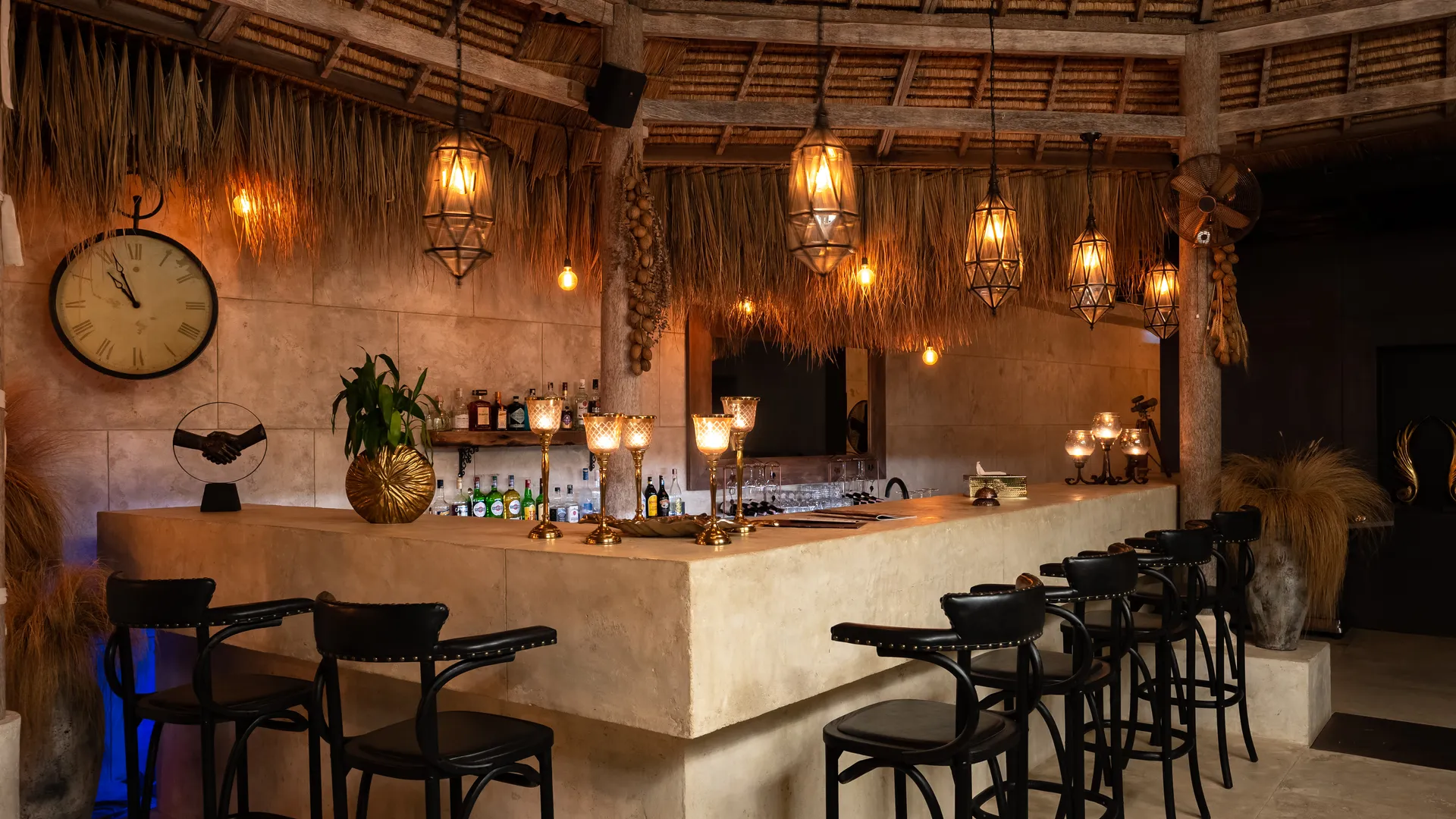
In the realm of luxury villa architecture, materials tell stories. They whisper of authenticity or shout of pretense. They age with dignity or deteriorate with disappointment. Learning to read these material narratives is essential to understanding true quality—and avoiding the polished disappointments that populate lesser properties.
“In the tropics, shade and air are your first materials. Everything else follows.”
Katia, Head of Large Group Bookings, Forbes & Partners Thailand
A masterclass in wood: How to identify authentic teak
Teak stands as the aristocrat of tropical hardwoods, revered not just for its honey-golden beauty but for its remarkable durability and natural resistance to termites, moisture, and decay. In authentic teak, you’ll feel a subtle oiliness to the touch—the wood’s natural oils that make it virtually impervious to tropical conditions.
The grain tells its own story: closely spaced lines that create an almost tactile richness, with variations that speak of the tree’s natural growth rather than the uniform patterns of manufactured alternatives. Real teak possesses a weight and density that’s immediately apparent when you handle a piece. Its color ranges from rich golden-brown in newly finished surfaces to a distinguished silvery-grey where it has gracefully weathered in exterior applications.
Beware of imposters—woods stained and treated to mimic teak’s appearance but lacking its inherent properties. These pretenders reveal themselves through time: splitting where teak would flex, fading where teak would patina, rotting where teak would endure. When you encounter silvery, weathered teak cladding on an older property, you’re witnessing the signature of true quality construction.
“Real teak doesn’t shout; it survives. Twenty monsoons later, it simply looks better.”
Sebastian, Co-Director, Forbes & Partners Thailand
The weight of place: Using local stone to ground a property
The finest Thai villas don’t simply sit upon the land—they emerge from it, using local stone materials that create both practical and philosophical connections to place. Laterite, a porous, reddish stone formed in tropical climates, serves as thermal mass that absorbs heat during the day and releases it slowly at night, naturally moderating interior temperatures.
Granite, quarried from Thailand’s mountains, provides density and coolness that offers refuge from tropical heat. These aren’t merely building materials; they’re geological storytelling elements that root a villa in its specific location rather than making it a generic luxury object that could exist anywhere.
Run your hand along a laterite wall in the afternoon heat and feel its coolness—this is passive climate control engineered by nature and harnessed by thoughtful design. This tactile experience, the relief of cool stone against warm skin, represents luxury in its most fundamental form: perfect comfort achieved through perfect integration with environment.
Reading the signs of superior craftsmanship
True luxury reveals itself in details that can’t be faked or shortcuts that weren’t taken. In a masterfully crafted villa, examine where different materials meet—wood transitions to stone, metal frames glass openings. These junctions should be seamless, with tolerances so precise they appear effortless.
Look for hand-finished details that speak of master craftspeople rather than mass production. Wood grain should flow continuously across door panels and frames, creating visual harmony that can only be achieved when pieces are carefully selected and matched. Hardware should operate with Swiss-watch precision—doors that close with a satisfying click rather than a hollow thud, windows that slide without effort, fixtures that feel substantial in the hand.
In our experience evaluating luxury properties, we’ve learned that in a truly well-crafted villa, you’ll notice how the wood grain of a door panel is perfectly aligned with its frame. This isn’t an accident or happy coincidence—it’s the signature of a master craftsperson who understands that luxury lies in the accumulation of perfect details.
“Luxury lives in the junctions — where tolerances disappear.”
Developing a discerning eye: Distinguishing timeless design from passing trends
The ability to distinguish between enduring design and fashionable decoration is what separates the sophisticated buyer from the merely wealthy. True luxury villa design possesses qualities that transcend momentary aesthetics, creating spaces that feel as relevant and comfortable decades after their creation as they did on day one.
The test of time: Is it proportional, functional, and integrated?
Proportion forms the foundation of timeless design. In exceptional villas, room sizes, ceiling heights, and window placements create an instinctive sense of harmony. These proportions aren’t arbitrary—they’re based on mathematical relationships that humans find inherently pleasing, principles that have guided great architecture from ancient Greek temples to contemporary masterpieces.
Functionality provides the substance beneath the style. A beautiful terrace that becomes unbearably hot by midday represents failed design, regardless of its photogenic qualities. A stunning kitchen with an illogical layout prioritizes appearance over livability. Timeless design seamlessly integrates form and function, creating spaces that are as practical as they are beautiful.
Integration speaks to the villa’s relationship with its environment. The finest designs don’t impose themselves upon their settings but instead create a dialogue with landscape, climate, and culture. This means seamless transitions between indoor and outdoor spaces, materials that reference local traditions, and orientations that capture the best views while avoiding the harshest conditions.
Learning from the masters: Architects who define thai luxury
Understanding Thai luxury architecture means recognizing the masters who have defined its language. Bill Bensley, renowned for his narrative-driven approach, creates properties that tell stories through their architecture, seamlessly blending cultural references with contemporary luxury. His work demonstrates how exceptional design can honor place while creating entirely new experiences.
Duangrit Bunnag represents the power of minimalist modernism in tropical settings, proving that stark geometry can create profound serenity when executed with precision and sensitivity to climate. His buildings achieve monumentality through restraint, creating spaces that feel both grand and intimate.
For deeper exploration of this architectural heritage, contemporary Thai architectural projects on ArchDaily showcase how today’s designers continue evolving these traditions. Projects like the modernist Thai villa design featured in Dezeen demonstrate how international modernist principles can be successfully adapted to tropical conditions. Academic research on Thai architectural identity provides scholarly insights into the fundamental elements that define authentic Thai design approaches.
The art of balance: Designing for harmony and serenity
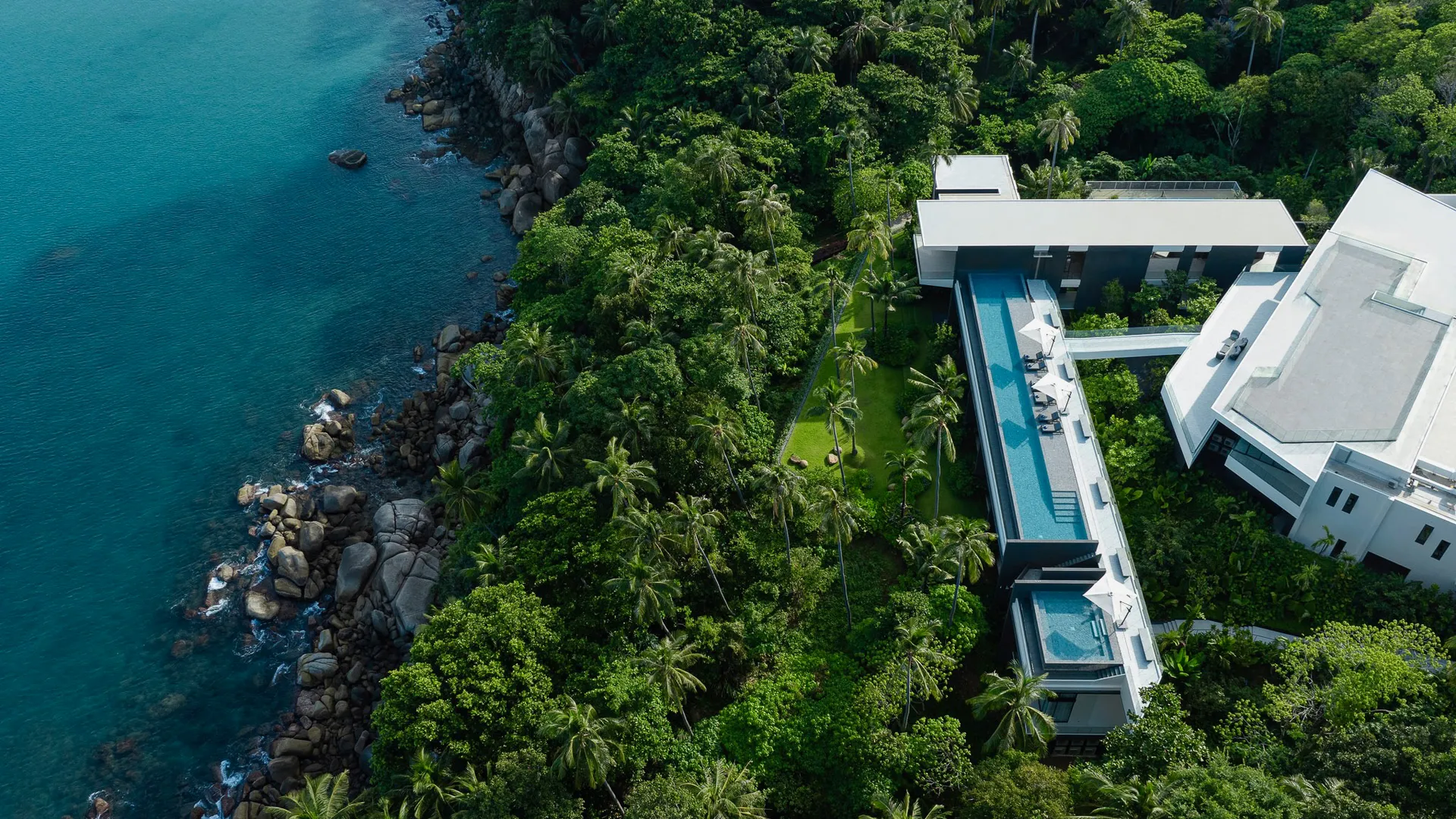
Beyond the technical aspects of climate response and material selection lies the more ephemeral realm of spatial experience—the way a villa makes you feel as you move through it. This emotional dimension of architecture separates good design from great design, creating the sense of serenity and ease that defines true luxury.
Choreographing the journey: Circulation and flow
Great villa design guides you through space with invisible choreography. You experience a carefully orchestrated sequence of compression and release—perhaps entering through a relatively intimate courtyard that opens dramatically onto a double-height living space with sweeping views beyond. This natural circulation creates an intuitive sense of comfort and discovery.
The finest villas demonstrate this principle through effortless transitions between spaces. You move from bedroom to private terrace to pool area without conscious decision-making because the design naturally leads you forward. This flow extends beyond individual rooms to encompass the entire property, creating a sense of coherence that makes even large estates feel intimate and navigable.
Lighting as a material: Shaping space with light and shadow
Exceptional villas use light as deliberately as any physical material. Natural light becomes a design element that changes throughout the day, creating different moods and highlighting different architectural features as the sun moves across the sky.
Skylights and courtyards bring controlled natural light deep into interior spaces, while carefully positioned windows frame specific views like living paintings. The interplay of light and shadow creates depth and interest, making spaces feel dynamic rather than static.
At night, artificial lighting takes over this sculptural role. Rather than simply illuminating spaces, thoughtful lighting design creates atmosphere and hierarchy, highlighting architectural features while providing intimate pools of warm light for human activities. This layered approach to lighting transforms the villa after dark, creating an entirely different but equally compelling experience of the same spaces.
Key takeaways
How to Evaluate Villa Architecture: A 4-Point Checklist
- Check for a Clear Identity: Does it follow a coherent style like Tropical Modernism, or is it a jumble of trends?
- Inspect the Materials: Look for authentic, high-quality materials like solid teakwood and local stone. Check for signs of master craftsmanship in the joints and finishes.
- Assess the Climate Response: Is the design intelligent? Look for wide overhangs, good ventilation, and orientation that protects from the harshest sun.
- Feel the Flow: Does the space feel intuitive and harmonious? The transition between indoor and outdoor spaces should be seamless.
Frequently asked questions about thai villa design
What are the key features of tropical modernism?
Key features include clean lines, open-plan layouts, the use of natural materials like wood and stone, large windows or retractable walls for indoor-outdoor living, and wide roof overhangs for passive cooling. This style prioritizes environmental harmony over pure aesthetics, creating spaces that work with rather than against tropical conditions.
What is the best wood for villa construction in Thailand?
Teakwood is widely considered the best wood due to its exceptional durability, natural resistance to pests and moisture, and beautiful appearance. Its ability to age gracefully makes it a hallmark of quality construction. Authentic teak possesses natural oils that protect it from tropical conditions, ensuring it will maintain its integrity for decades.
How do you design a house for a tropical climate?
You design for the climate by prioritizing passive cooling over artificial means. This involves orienting the building to avoid direct sun, designing for cross-ventilation, using deep roof overhangs for shade, utilizing materials with high thermal mass like stone, and integrating the building with the landscape. The goal is creating comfort through design rather than mechanical systems.
How is thai architecture different from balinese?
While both are tropical styles, traditional Thai architecture often features steeper, more elegant gabled roofs and elevated structures that protect against flooding. Balinese design, by contrast, typically focuses on a collection of pavilions within a walled compound and emphasizes intricate, decorative carvings. Modern interpretations often blend these approaches, but the historical roots differ in both form and underlying philosophy.
Design as a statement of quality
Architecture isn’t merely the shell that contains luxury—it is luxury itself, expressed through the language of space, material, and light. Every decision, from the selection of locally quarried stone to the precise angle of a roof overhang, represents a choice between expedience and excellence, between following trends and creating something timeless.
You are no longer simply an admirer of beautiful spaces but an informed evaluator, equipped with the knowledge to recognize true, lasting quality. You understand that exceptional villa design results from the marriage of vision and craftsmanship, of aesthetic ambition and practical intelligence, of respect for place and aspiration for transcendence.
The finest villas in Thailand’s luxury market, particularly those found on islands like Koh Samui and Phuket where natural beauty demands architectural excellence, don’t just provide shelter—they shape your experience of a place. They are the silent, ever-present hosts of unforgettable stays, creating the backdrop against which life’s most precious moments unfold. In recognizing this truth, you’ve gained access to a level of appreciation that transforms every future encounter with exceptional design into a deeper, more rewarding experience.
Appreciate exceptional design? Explore architecturally significant villas for rent from our curated collection — or speak with a Forbes & Partners specialist to match your stay with the right design and location.

Forbes & Partners Editorial Team
The Forbes & Partners Editorial Team specializes in creating expert-driven insights on luxury villas, property investment, and vacation rentals in Thailand. Each article blends the efficiency of AI-assisted writing with the precision and experience of human specialists in Thailand’s luxury real estate market, ensuring readers receive reliable, up-to-date, and high-value information to guide their next investment or stay.