- Main Article: The Samui Promise: How Our Family Turned a Two-Week Holiday into a Lifetime Home
- Related articles:
- The Dual Return: Calculating the Financial ROI and Lifestyle Value of Your Koh Samui Villa
- Paradise for All Ages: The Expat Parent’s Guide to Schools, Healthcare, and Family Life in Koh Samui
- From Offer to Ownership: A Foreigner’s Complete Legal Roadmap for Buying a Koh Samui Villa (current article)
Can a foreigner buy a house in Koh Samui?
Quick Answer: Yes, foreigners can legally own a villa or house structure, but not the land it sits on. To secure rights to the land, they must use one of two primary legal methods: a registered 30-year leasehold or purchasing through a properly structured Thai limited company.
When buying a villa in Koh Samui as a foreigner, here are the essential legal takeaways:
- The Core Rule: Foreigners are legally prohibited from owning land in their own name in Thailand, but they can own the building on the land.
- Two Legal Paths: You can secure the property through a 30-year leasehold (a simpler, time-limited option) or through a Thai limited company (a more complex structure that allows for freehold ownership).
- Leasehold Reality: A 30-year lease is legally secure for its term, but renewals are not guaranteed, despite common claims of '90-year leases'.
- Company Structure: This path offers indefinite ownership but requires careful legal setup and ongoing compliance to avoid using illegal 'nominee' shareholders, which is a major risk.
- Due Diligence is Critical: Before purchasing, you must conduct comprehensive due diligence, including verifying the Chanote title deed, building permits, and legal road access.

Securing your slice of paradise legally
The pristine beaches of Koh Samui beckon with their crystal-clear waters and luxury villas offering unmatched tropical elegance. What begins as an escape from the ordinary often evolves into a profound desire to call this remarkable island home. Yet for foreign buyers, the path from vacation guest to villa owner presents a complex maze of Thai legal requirements that can transform dreams into challenges.
This article serves as your definitive legal roadmap—not merely another surface-level overview, but a comprehensive guide built on real-world experience navigating Thailand’s property laws. We’ll dissect the two primary legal pathways available to foreigners, expose dangerous myths that trap unwary buyers, and provide actionable checklists to ensure your investment remains secure.
For families inspired by transformative experiences detailed in The Samui Promise, the legal complexity of property ownership often represents the final hurdle before making Koh Samui their permanent refuge. Understanding these laws isn’t just about compliance—it’s about protecting your investment and securing your future in paradise.

On this page: The holiday that sparked a dream From 'what if' to 'how to': an honest look at family life in Samui Show more Vetting the essentials: schools, healthcare, and community Choosing our corner of paradise: finding a family-friendly vibe Navigating the numbers: understanding the true cost and value Show more Beyond the villa […]
The core challenge: Foreign land ownership law in Thailand

The fundamental principle governing property ownership in Thailand is clear and unwavering: The Thai Land Code Act prohibits foreigners from owning land in their own name. This restriction reflects Thailand’s constitutional protection of national sovereignty over its territory, a principle that has remained constant throughout the country’s modern history.
In practical terms, this means foreigners can legally own buildings, structures, and improvements on land, but cannot hold title to the underlying real estate. A foreign buyer can own a villa but not the plot it occupies—a distinction that initially confuses many international investors but forms the cornerstone of all legal property acquisition strategies in Thailand.
This restriction has given rise to two primary, legally-accepted pathways that allow foreigners to secure long-term rights to property while respecting Thai sovereignty laws. These solutions, refined through decades of legal practice and government oversight, provide foreign buyers with viable options for securing their investment in Thai real estate.
The official Thai government guide on foreign property ownership provides the authoritative framework for these regulations, emphasizing that while restrictions exist, legitimate pathways for foreign property investment remain well-established and protected under Thai law.
Path A vs. path B: A detailed comparison of leasehold and Thai limited company
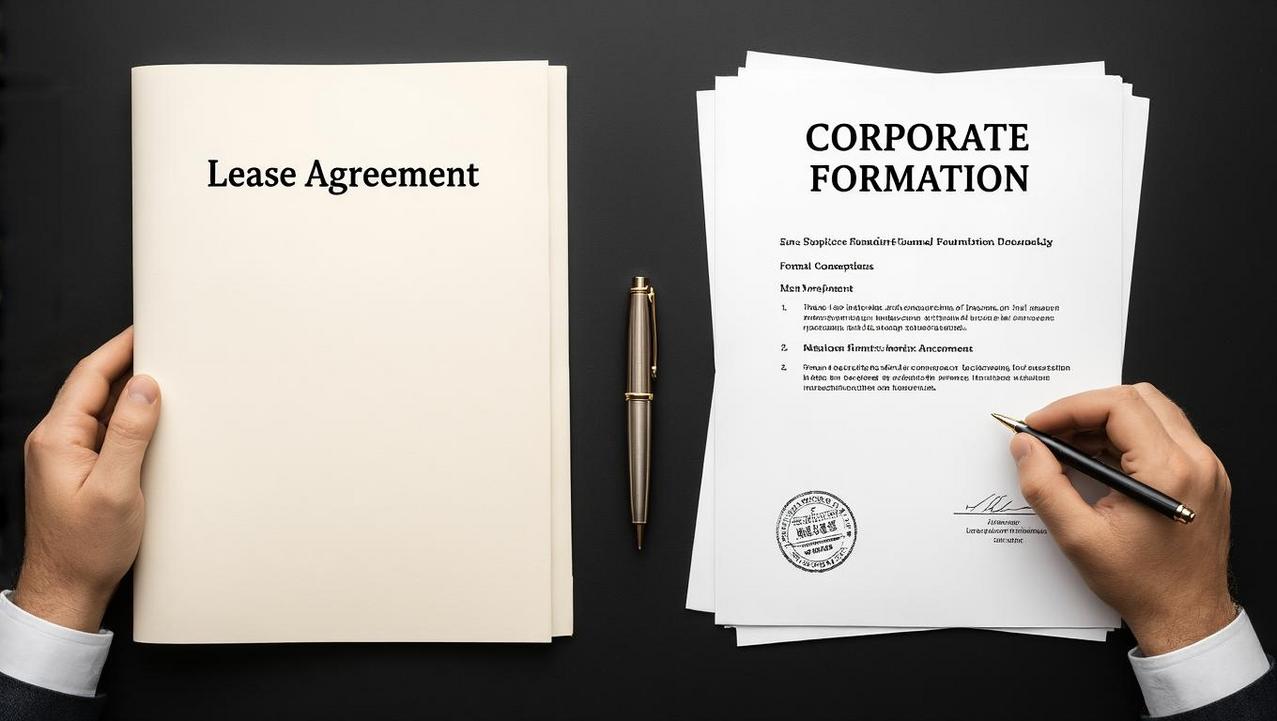
Foreign buyers face a fundamental choice between two distinct legal structures, each offering different advantages, costs, and levels of control. Understanding these options thoroughly enables informed decision-making based on individual circumstances and long-term objectives.
| Aspect | 30-Year Leasehold | Thai Limited Company |
|---|---|---|
| Ownership Type | Registered lease right | Freehold via company ownership |
| Term Length | 30 years (renewal dependent) | Indefinite |
| Control Level | Direct personal control | Indirect via company control |
| Setup Cost | Lower (50,000-100,000 THB) | Higher (150,000-300,000 THB) |
| Ongoing Costs | Minimal | Annual accounting, audits |
| Complexity | Simple registration | Complex corporate structure |
| Key Risk | Non-guaranteed renewal | Compliance requirements |
| Best For | Shorter-term, simpler needs | Long-term, complex estates |
The 30-year leasehold explained
The leasehold structure involves registering a 30-year lease at the District Land Department, creating a legally enforceable right that provides security comparable to ownership for the lease duration. This process requires both parties to appear at the Land Office with proper documentation.
The primary advantages include straightforward setup procedures, lower ongoing maintenance costs, and direct personal control over the property without corporate intermediaries. The registered lease provides strong legal protection, and the leaseholder can typically mortgage, renovate, or transfer their rights subject to lease terms.
However, the finite nature of the lease presents challenges. While many lease agreements include renewal clauses, these provisions create contractual obligations between current parties that may not bind future landowners or heirs, creating uncertainty for long-term planning.
The Thai limited company structure
The company structure involves establishing a Thai Limited Company where foreign shareholders can legally hold up to 49% of shares, while Thai nationals must hold at least 51%. The company, as a Thai legal entity, can own land freehold without restrictions.
Critical to this structure’s effectiveness is the use of preference shares and carefully crafted articles of association that allow foreign minority shareholders to maintain legal control over company decisions. This mechanism enables foreigners to control property decisions while maintaining compliance with Thai foreign ownership laws.
The advantages include indefinite ownership duration, easier transfer of ownership through share transfers rather than property transfers, and potential tax benefits for property-related businesses. The structure also provides flexibility for multiple property ownership and business operations.
The complexities involve higher setup and maintenance costs, annual compliance requirements including accounting and audit obligations, and the need for careful legal structuring to ensure continued compliance with foreign business regulations.
Myth vs. reality: Debunking common dangers in Thai property acquisition

Years of experience in Thai property transactions reveal recurring misconceptions that create significant risks for foreign buyers. Understanding these myths versus legal realities protects buyers from costly mistakes and potential loss of investment.
Myth #1: A 90-year lease is guaranteed
The Myth: Property developers and sellers frequently promote lease agreements as effectively providing 90-year terms through two automatic 30-year renewals (30+30+30), presenting this as equivalent to freehold ownership.
The Reality: Lease renewal clauses represent contractual promises between current parties but do not create automatic legal obligations for future landowners. A legal analysis of Thai lease renewals shows that the Thai Supreme Court has consistently ruled that renewal clauses cannot be automatically enforced against new landowners or heirs who were not original parties to the agreement.
This distinction becomes critical when the original landowner dies, sells the land, or faces financial difficulties that result in foreclosure. The new landowner has no legal obligation to honor renewal clauses, potentially leaving leaseholders without recourse at the end of their initial 30-year term.
Myth #2: Using ‘nominee’ shareholders is a safe workaround
The Myth: Many buyers believe they can circumvent foreign ownership restrictions by using Thai nationals as ‘nominee’ shareholders—friends, staff, or hired individuals who hold shares without any real financial investment or involvement in the company.
The Reality: This practice directly violates the Foreign Business Act and represents one of the most dangerous pitfalls in Thai property acquisition. Ongoing government crackdowns have intensified enforcement against nominee structures, with authorities conducting regular audits of foreign-controlled companies to verify the legitimacy of Thai shareholdings.
The consequences include immediate loss of company control, forfeiture of property ownership, substantial financial penalties, and potential criminal charges for both foreign buyers and Thai nominees. Recent cases have demonstrated the government’s commitment to eliminating these illegal structures, making this risk unacceptable for serious investors.
The non-negotiable step: Your comprehensive due diligence checklist

Thorough due diligence represents the most critical protection available to foreign property buyers in Thailand. This comprehensive verification process, conducted before committing to purchase, identifies potential problems while solutions remain available and prevents costly discoveries after ownership transfer.
Verifying the title deed (chanote)
The Chanote (Nor Sor 4 Jor) represents the highest level of land title security in Thailand, providing definitive proof of ownership boundaries and legal status. Verification requires a comprehensive search at the local Koh Samui Land Office to confirm the seller’s legitimate ownership and identify any encumbrances.
Essential verification steps include confirming the title deed number matches official Land Office records, verifying the seller’s name exactly matches the deed, checking for any registered mortgages or liens, and ensuring boundary descriptions match the actual property. This process must be conducted by qualified legal professionals familiar with Land Office procedures and documentation requirements.
The Thai Department of Lands official FAQ provides detailed information about title deed types and verification procedures, emphasizing the importance of professional verification before any property transaction.
Checking permits and access
Building permits verification ensures the villa was constructed legally and matches approved plans, preventing future problems with authorities or potential demolition orders. This check includes reviewing original building permits, confirming construction matches approved specifications, and verifying occupancy certificates are current and valid.
Legal access verification proves essential for long-term property enjoyment. Properties must have guaranteed access via public roads or registered private easements, not merely informal agreements that could be terminated. Documentation must clearly establish permanent, legally enforceable access rights that cannot be blocked by neighboring properties or future development.
Reviewing company documents
For company-owned properties, comprehensive corporate due diligence prevents inheriting hidden liabilities or compliance problems. This review includes examining company registration documents, reviewing financial statements and tax filings, checking for outstanding debts or legal disputes, and verifying proper corporate governance procedures have been followed.
The audit should also confirm that all Thai shareholders represent legitimate investors rather than nominee arrangements, ensuring the company structure remains legally compliant and sustainable for long-term ownership.
From agreement to keys: Navigating the transaction process

The final stages of property acquisition follow established procedures that, with proper legal guidance, proceed smoothly and securely. Understanding these steps in advance helps buyers prepare necessary documentation and coordinate timing effectively.
The sale and purchase agreement (spa)
The Sale and Purchase Agreement serves as the master contract governing the entire transaction. Key clauses require careful attention, including detailed payment schedules with clear milestones, specific transfer dates with penalty provisions for delays, comprehensive warranties from the seller regarding title and property condition, and clear default remedies protecting both parties’ interests.
The agreement should specify exactly which items are included in the sale, outline responsibility for various costs and fees, and establish procedures for handling any problems discovered before completion. Professional legal review ensures all clauses provide adequate protection and comply with Thai contract law.
The flow of funds
If the funds used for the property purchase originate from overseas, the bank will issue a Foreign Exchange Transaction (FET) form for amounts exceeding USD 50,000.
This documentation serves multiple purposes: it satisfies Bank of Thailand reporting requirements, provides evidence for property ownership claims, and may be required for future fund repatriation. Buyers should coordinate with their banks early to ensure smooth processing and proper documentation.
Transfer at the land office and associated costs
The final transfer takes place at the District Land Office where all parties—seller, buyer, and legal representatives—sign the official transfer documents. The Land Office reviews all documentation, calculates required fees, and registers the new ownership or lease.
Typical costs include transfer fees (approximately 2% of registered value), stamp duty (0.5%), and specific business tax (3.3% if the seller has owned the property less than five years). These costs are typically divided between buyer and seller according to local custom or specific agreement terms, and should be budgeted in advance of the transaction.
Frequently asked questions about buying property in Koh Samui
Can a foreigner buy a house in Koh Samui?
Yes, foreigners can legally own the building or villa itself, but must secure rights to the land through either a registered 30-year leasehold or by purchasing through a properly structured Thai limited company.
What are the risks of buying property in Thailand?
The primary risks include using illegal nominee shareholder structures, failing to conduct thorough due diligence on title deeds, misunderstanding that lease renewals beyond 30 years are not guaranteed, and inadequate legal representation during the transaction process.
What happens after a 30-year lease in Thailand?
A 30-year lease expires at the end of its term, and any renewal depends entirely on the original lease agreement terms and the current landowner’s willingness to extend—it is never automatic or legally guaranteed.
Is a nominee shareholder legal in Thailand?
No, using Thai nationals as nominee shareholders to circumvent foreign ownership laws is illegal under the Foreign Business Act and carries severe penalties including property forfeiture and criminal charges.
How do you check property ownership in Thailand?
Property ownership is verified by conducting an official title search at the relevant District Land Office, where qualified professionals can review the Chanote title deed and confirm ownership details, boundaries, and any encumbrances.
A secure investment with the right guidance
While Thai property law presents complexities that initially appear daunting, these legal frameworks are not insurmountable barriers for informed buyers. Thousands of foreigners have successfully acquired stunning villas throughout Koh Samui’s most prestigious areas, from beachfront estates to hillside retreats with panoramic ocean views.
The key to successful property acquisition lies in understanding the two primary legal pathways—leasehold and company structures—making informed choices based on individual circumstances, and partnering with experienced legal professionals who understand both Thai law and international buyers’ needs. Avoiding dangerous myths and conducting comprehensive due diligence transforms what might seem like a risky venture into a secure, well-protected investment.
With proper guidance and careful attention to legal requirements, owning a luxury villa in Koh Samui becomes not just a dream, but an achievable reality that provides both lifestyle benefits and long-term investment security in one of Southeast Asia’s most desirable destinations.
Take the next step with confidence
Ready to take the next step with confidence? Our network of expert legal partners can ensure your purchase is secure. Contact us to get started.

Forbes & Partners Editorial Team
The Forbes & Partners Editorial Team specializes in creating expert-driven insights on luxury villas, property investment, and vacation rentals in Thailand. Each article blends the efficiency of AI-assisted writing with the precision and experience of human specialists in Thailand’s luxury real estate market, ensuring readers receive reliable, up-to-date, and high-value information to guide their next investment or stay.